
IV.B.5 Head: CN IX & CN X Page 2 of 4
Upon exiting the jugular foramen, two ganglia (the superior and inferior) containing the cell bodies of the sensory nerves of the glossopharyngeal nerve.
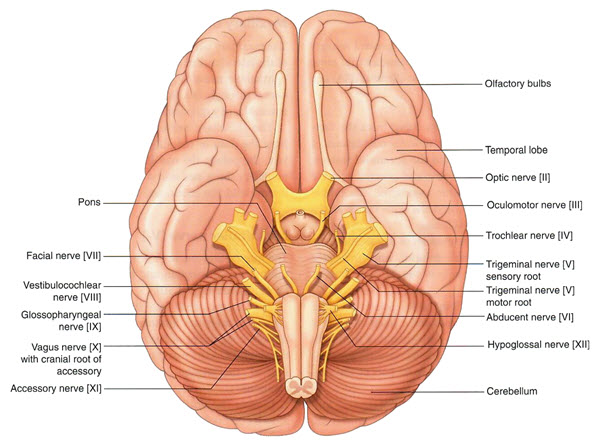
The glossopharyngeal nerve provides a range of functions which include:
- Sensory input from the carotid body and sinus (GVA)
- Sensory input from the posterior third of the tongue, palatine tonsils, oropharynx, middle ear, pharyngotympanic tube (eustachian tube) and the mastoid air cells (GSA). The tympanic nerve returns to the temporal bone to participate in the tympanic plexus. This supplies sensory input from the middle ear, pharyngotypmpanic tube (eustachian tube) and the mastoid air cells
- Taste from the posterior one third of the tongue (SA)
- The temporal nerve also contributes preganglionic parasympathetic innervation (GVE) to the otic ganglion which provides secretomotor activity to the parotid gland.
- It also innervates the stylopharyngius muscle via (BE) fibers.