
IV.B.5 Head: CN IX & CN X Page 3 of 4
Let's turn our attention to the vagus nerve CN X
| Step 3: View the vagus nerve CN X. |
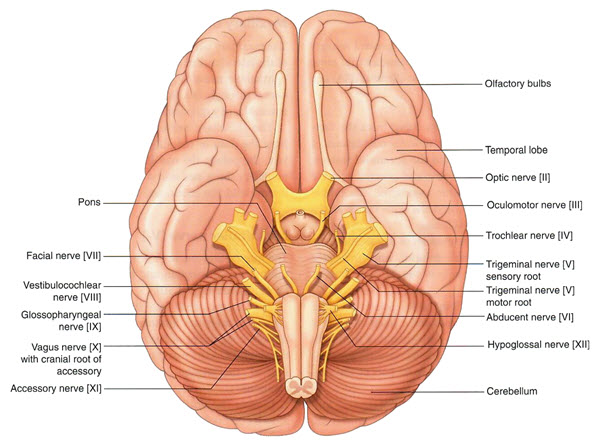
The vagus nerve arises from rootlets on the anteriolateral surface of the medula oblongata just inferior to the rootlets that form the glossopharyngeal nerve.
Like the glossopharyngeal nerve the vagus rootlets enter the jugular foramen and exit as the vagus nerve. And like the glossopharyngeal nerve two ganglia (Superior and inferior) are formed to contain sensory neurons from CN X.
The vagus nerve has many functions, which include:
- Sensory input from larynx, laryngopharynx, deeper parts of the auricle, part of the acoustic meatus, and the dura mater of the posterior fossa (GSA)
- Sensory input from the aortic body chemoreceptor and the aortic arch baroreceptors. In addition, the esophagus, bronchi, lung, heart, abdominal viscera from the foregut and midgut (GVA)
- Taste around the epiglottis and pharynx (SA)
- Parasympathetic invervation of the smooth muscle and glands in the pharynx, larynx, thoracic viscera, and abdominal viscera of the foregut and midgut. (GVE)
- It also innervates the palatoglossus, muscles of the soft palate (except the tensor veli palatini) the muscles pf the pharynx (except the stylopharyngeus) and the muslces of the larynx. (BE)