
I.D.1 Shoulder & Arm: Skeletal Structures: Shoulder, Axilla, Arm, & Elbow: Page 3 of 5
As you add the following muscles, study how they coordinate to allow the upper arm to move:
| Step 5: Add the latissimus dorsiReview its function. | |
| Step 6: Add the triceps brachii. |
 |
Based on the location of the triceps brachii, what does this muscle do to the forearm? |
|
It extends the forearm. 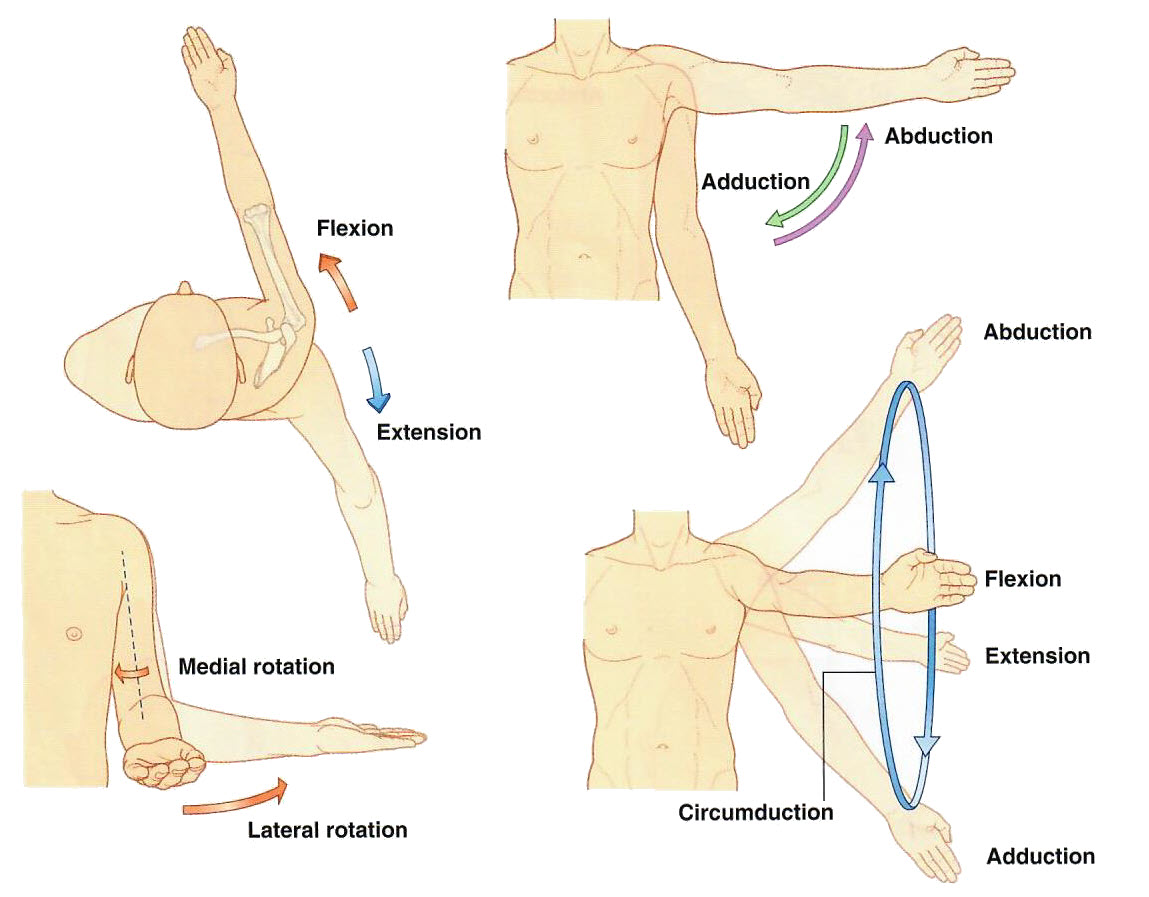
|
|
|
What does the triceps brachii do to the arm? |
|
It extends and adducts the arm at the shoulder joint. |
|
| Step 7: Add the subscapularis. In order to see this muscle, you will need to rotate the cadaver to an anterior view. | |
| Step 8: Add the teres major. |
All three of these muscles (triceps brachii, suscapularis, and teres major) work together to extend and/or medially rotate the arm .
| Step 9: Add the teres minor. | |
| Step 10: Add the infraspinatus. |
These two muscles cause lateral rotation of the arm at the glenohumeral joint
| Step 11: Add the supraspinatus which helps to initiate abduction of the arm to 15 degrees at the glenohumeral joint. You will need to rotate the cadaver to see the complete muscle. |
|
What muscles are part of the rotator cuff? |
|
Supraspinatus, infraspinatus, teres minor and the subscapularis. |
|